What makes a secret mountain base in Rust so hard to find and so easy to lose?
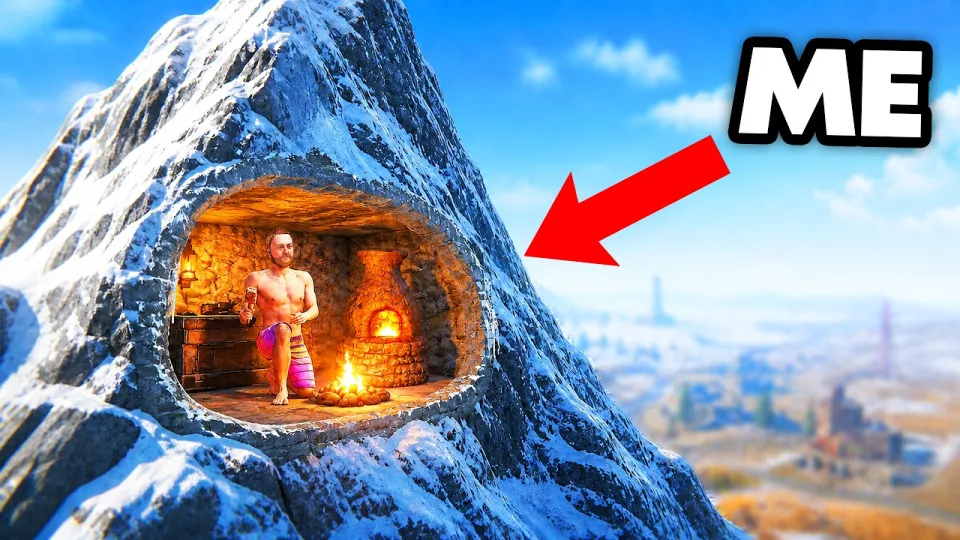
Video: I Lived in a Secret Mountain Base in Rust
Want articles like this for your own video to promote it on YouTube and Google? Order them through the Telegram bot @sat_sit_bot. The bot writes and publishes the articles itself (with your YouTube video embedded) on popular topical websites (no ads). Your first 50 articles are free.
· based on the channel Memeio
Key takeaways
- A mountain base in Rust stays hidden mostly through camouflage and a low profile, not through impossible geometry — viewers compared Memeio's build to a child hiding behind their own hands.
- Solo survival depends on never being raided: a 2x2 tucked into a cliff pocket costs little upkeep and rarely shows up in a raider's route.
- Eco raiding rewards preparation: broken wooden spears can be recycled into stone spears, effectively doubling the spear count for the same stone.
- The most common giveaway is visibility — a base silhouette that sticks out above a ridge, or sits within sight of two other bases on the same mountain.
- Cheaters and off-server information still ruin hidden bases, which is why location alone never guarantees a safe wipe.
A secret mountain base in Rust works because it removes the two things raiders hunt for: a visible silhouette and an obvious reason to spend explosives. Camouflage, a cheap footprint and a location nobody routes past matter far more than any clever building trick, and that is exactly the approach Memeio takes in the video "I Lived in a Secret Mountain Base in Rust" on the Memeio X account, where the channel posts updates and clips between wipes.
The idea is simple: if nobody sees the base, nobody farms the sulfur to break it. What follows is a practical breakdown of how that strategy holds up on a live server, what usually goes wrong, and which habits from the survival genre translate directly into Rust.
Why a hidden mountain base in Rust beats a bigger, better one
A hidden mountain base is a bet that obscurity is cheaper than defense. Rust rewards that bet because raiding is an economy: every sheet of metal and every rocket has to be farmed, crafted and carried, so raiders pick targets they can see, reach and justify. A base that costs almost nothing to maintain but costs a full raid to break is a bad investment for anyone passing by.
Mountain terrain amplifies the effect. Cliffs, rock formations and uneven ground break line of sight from the road, from the monuments and from the usual scouting routes. A small footprint slots into gaps that a clan-sized compound never could, and the low upkeep means a solo player can log off for a day without the base decaying into a giveaway.
The trade-off is real. Remote locations mean longer runs for scrap, worse access to monuments and a painful respawn if you die far from home. The mountain base is not a better base — it is a cheaper secret.
How the camouflage actually works, and where it fails
Camouflage in Rust is about breaking the shape, not painting the walls. Twig and wood blends into rock better than sheet metal; a flat roof reads as terrain from above; a structure that hugs a cliff face casts a smaller shadow than one standing free. Players who build into natural pockets report far fewer random visitors than players who build on a peak.
The failure mode is silhouette. A compact 2x2 perched on top of a mountain is visible from a long distance and looks exactly like what it is — loot with a door. Viewers of the video made the same point bluntly, comparing the camouflage to a toddler hiding behind their own hands, and noting that plenty of "super secret" bases are just small boxes standing in the open a short walk from two other bases.
A quick checklist before you commit to a spot:
- Stand on the nearest road and look up — if you can see the roof, so can everyone else.
- Check the horizon from two monuments and one neighboring mountain.
- Confirm the base does not sit inside the render distance of an existing base; neighbors mean traffic.
- Look for a natural overhang, a rock pocket or a dip that hides the top two walls.
- Count the walking time to the nearest recycler — anything past a few minutes gets old fast.
The eco raiding trick that doubles your spears
Early-game raiding is a math problem, and one of the most useful tricks in Rust is recycling broken wooden spears into stone ones. A broken wooden spear still counts as an item you can craft from, so with a modest amount of stone you can effectively double the number of usable spears in your inventory instead of farming more wood from scratch.
The order matters. Broken spears need to sit ahead of unbroken ones in the inventory so the crafting process consumes the right items, and the resulting stone spears hit far harder against wooden doors and soft-sided bases than the sticks you started with. It is the kind of preparation that turns a cheap solo raid into a realistic one.
This is also why hidden bases pair so well with eco raiding. A player who spends nothing on visible defense can spend everything on the tools to break someone else's door before they ever get raided themselves.
What actually gets a secret mountain base found
A secret base is usually found through information, not through luck. The most common leaks are predictable:
- Noise and lights. Furnaces, campfires and turrets are visible and audible at night; a glowing base on a dark mountain is a beacon.
- Traffic patterns. Running the same route to the same door every session lets anyone watching learn where you sleep.
- Bodies and bags. Dying near your base and respawning on a nearby bag tells observers exactly where home is.
- Neighbors. Building within sight of another base invites a scout who is already on the mountain for someone else.
- Cheaters. Third-party vision and information tools ignore camouflage entirely, which is why some wipes end in a raid no amount of hiding can prevent.
None of these are solved by better building. They are solved by habits: vary your route, keep the lights off when you log, store loot in more than one place, and accept that a hidden base buys time rather than immunity.
Solo survival lessons that transfer from other games
Players coming from other survival titles tend to arrive with the right instinct: the best raid defense is never being raided. A base that nobody knows exists never has to win a fight, and a tiny footprint is easier to hide than a large one — a lesson that shows up in every survival game with persistent servers and offline raiding.
Rust is harsher than most because wipes reset everything and because the map is small enough that players learn it quickly. That makes the mountain base a seasonal strategy: it works best early in a wipe, when everyone is farming and scouting is shallow, and it gets riskier as the server matures and the remaining players know every rock. The players who keep a hidden base alive for a whole wipe are usually the ones who move quietly and rarely draw attention.
Common questions about hidden bases in Rust
Skepticism about secret bases is healthy, and most of it comes down to three doubts: whether a small base can hold enough loot, whether the location is worth the travel time, and whether hiding is really a strategy or just a delay. In practice a compact base with smart storage holds more than enough for a solo player, and the travel time is the price of not being raided. The delay is the point — every wipe you survive without a raid is a wipe you keep your progress.
Useful links
- Memeio on X — channel updates, clips and announcements between videos.
- Epidemic Sound — the music library credited for the video's soundtrack.
The verdict on living in a secret mountain base
Hiding a base in the mountains of Rust is a legitimate solo strategy, not a gimmick. It trades convenience and expansion for the one thing raiders cannot take from you: not knowing where you live. The camouflage has to be genuinely good, the footprint has to stay small, and the habits around the base matter as much as the walls.
The video from Memeio is a useful case study precisely because it shows the strategy under real pressure, including the parts that do not go to plan. If you want more of that mix of survival tactics and comedy, follow Memeio on X and keep an eye on the next wipe.
Source: I Lived in a Secret Mountain Base in Rust · Markdown version
Questions & answers
Is a secret mountain base in Rust actually safe from raids?
No base is fully safe, but a hidden mountain base avoids most raids simply by never being scouted. Its real protection is a small footprint, low upkeep and a location outside normal traffic routes. Cheaters and players who already know the map can still find it, so treat it as a delay rather than immunity.
How much loot can a tiny hidden base hold?
A compact 2x2 or 1x2 with smart storage holds plenty for a solo player, especially early in a wipe. The limit is not space but logistics: you need enough boxes for farm and components while keeping the base small enough to hide. Spreading loot across two hidden spots reduces the risk of losing everything at once.
What is the broken spear trick for eco raiding?
Broken wooden spears can still be used to craft stone spears, so a bit of stone effectively doubles the number of spears you have. Keep the broken spears ahead of the unbroken ones in your inventory so crafting consumes the right items. Stone spears do far more damage to wooden doors than wooden ones.
Why do so many secret bases get spotted immediately?
Most are spotted because of silhouette, not bad luck: a small box on top of a mountain is visible from the road and from neighboring peaks. Lights, furnaces, repeated running routes and nearby bases all give away a location too. Fixing the shape of the build and the habits around it matters more than any single building trick.